What Is a Transportation Management System? Components & Benefits
A transportation management system (TMS) solves a problem many distribution teams across Southeast Asia still face every day: managing dozens of vehicles and hundreds of delivery points with spreadsheets that several departments update by hand. The result is frequent human error and miscommunication, so even simple questions like
“Which vehicles are on the road right now?”
or
“Which route cost us the most this month?”
take a long time to answer, and problems are often discovered only after they happen.
The MileApp transportation management system is built to fix this. This article explains what a TMS is, the core components that make it up, and how MileApp turns each component into features your distribution team can use every day.

What Is a Transportation Management System (TMS)?
A transportation management system (TMS) is software that helps companies plan, execute, and optimize the movement of goods across the supply chain, from optimizing pickup and delivery routes and automatically assigning tasks to drivers to real-time visibility of every shipment’s status.
A TMS rarely works in isolation. As part of the wider supply chain management ecosystem, which spans the first mile, middle mile, and last mile, a TMS is usually integrated with enterprise resource planning (ERP) and a warehouse management system (WMS), so delivery, inventory, and finance data stay connected in one workflow.
Why Transportation Management Systems Are Increasingly Essential
Global TMS Market Growth
Demand for transportation management systems is not a passing tech trend.
According to MarketsandMarkets, the global TMS market is projected to reach USD 37.04 billion by 2030, up from USD 18.50 billion in 2025, at a compound annual growth rate (CAGR) of 14.9%.
These figures reflect real industry needs, not just hype.
Rising Delivery Expectations in the E-commerce Era
Rapid e-commerce growth means consumers expect faster, more transparent deliveries. A TMS addresses this pressure by streamlining every stage of the supply chain, from route planning and real-time tracking to data analysis, so companies can deliver a better experience to end customers.
Read also: What Is a Delivery Management System and How Does It Support E-commerce Deliveries?
Core Components of a Transportation Management System and How MileApp Delivers Them
In general, a TMS is made up of several integrated core components. Here is what each one does, and how MileApp turns it into a real, ready-to-use feature.
1. Route Planning & Optimization
This component determines the most efficient delivery routes based on distance, vehicle capacity, and conditions on the ground. In MileApp, it comes as a route optimization feature that calculates routes automatically to cut travel time and fuel costs. If you are still weighing options, see how route optimization compares with Google Maps.
2. Automated Execution & Dispatch
Once routes are set, tasks need to reach drivers immediately, without time-consuming manual steps. MileApp automatically sends each task to the driver’s mobile app, complete with the delivery details needed in the field.
3. Real-Time Delivery Visibility
Managers and dispatchers need to know delivery status at any moment, not wait for an end-of-day report. MileApp’s live tracking and big data dashboard show vehicle positions and delivery status in real time, so delays can be spotted early.
4. Digital Proof of Delivery
Accurate delivery documentation is an essential part of a good TMS. MileApp provides e-POD (electronic proof of delivery) with photos, digital signatures, GPS data, and timestamps, making it much harder to manipulate than paper documents. Learn more about the benefits of electronic proof of delivery.
5. Analytics & Performance Reporting
Operational data needs to be turned into actionable insight. MileApp provides real-time dashboards and automated KPI reports across all logistics processes and teams, helping managers make faster, better-informed decisions.
Read also: How to Measure TMS ROI: Costs, Metrics, and Formulas
Benefits of a TMS for Managers and Distribution Teams
The right TMS implementation delivers benefits your distribution team will feel right away:
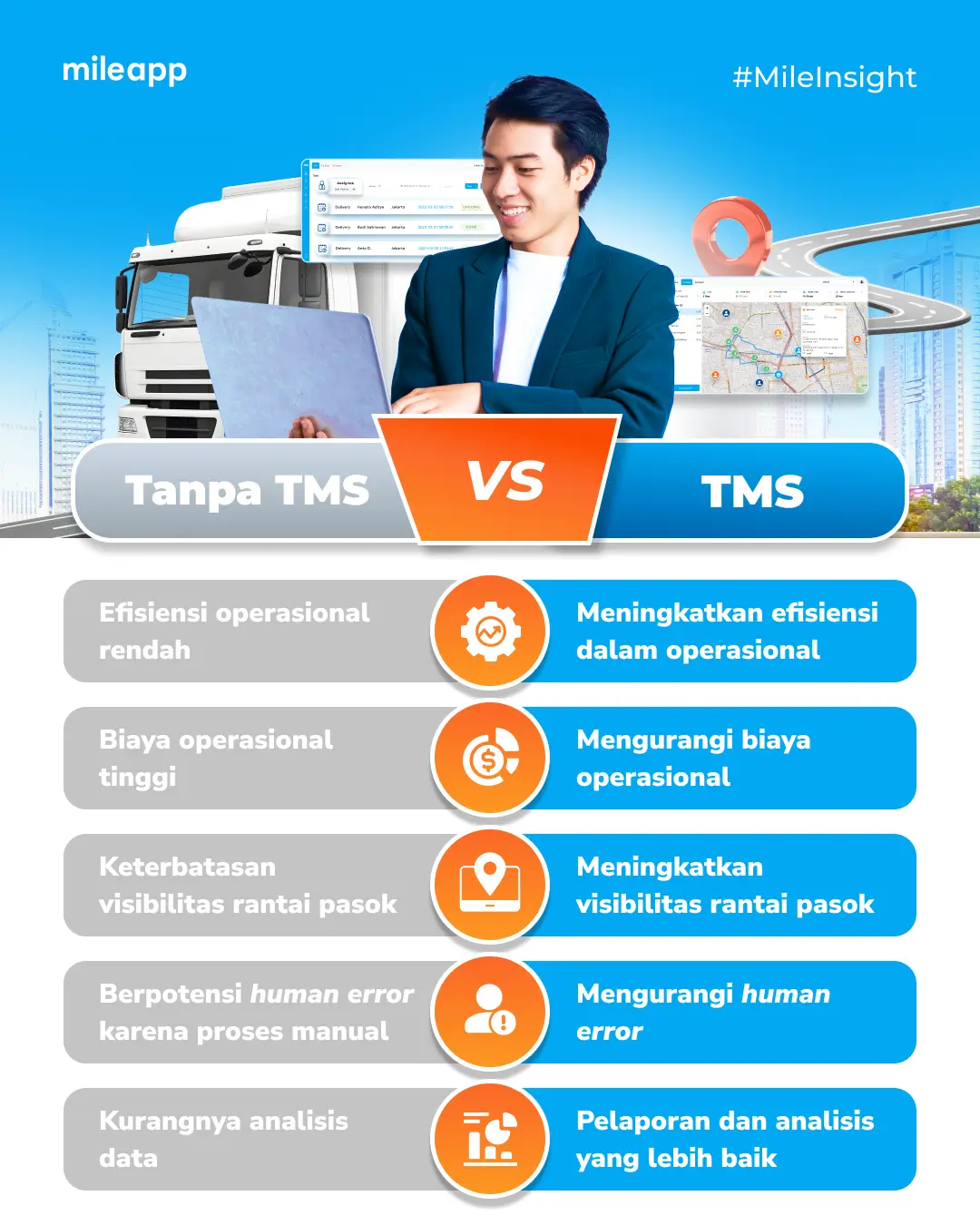
- 5–15% annual savings on shipping costs, based on studies of implementations across the logistics industry. The savings come from route optimization that reduces distance traveled, load consolidation that minimizes empty trips, and rate comparison across carriers.
- Fewer human errors through automated administrative workflows, from creating delivery orders to matching invoices.
- More accurate fleet capacity planning, because managers have historical data on demand patterns, problem routes, vehicle utilization, and driver performance. Pair this with the right fleet management features for full control of your vehicles.
Read also: Fleet Management System: A Complete Guide and How It Differs from a TMS
Transportation Management System FAQ
What is a transportation management system (TMS)?
A TMS is software that helps companies plan, execute, and optimize the movement of goods, covering route optimization, automated dispatch, real-time visibility, and delivery performance reporting.
What are the core components of a TMS?
The core components of a TMS are route planning & optimization, execution & dispatch, real-time delivery visibility, digital proof of delivery (e-POD), and performance analytics and reporting.
What is the difference between a TMS and an FMS?
A TMS covers the entire distribution process, from planning to delivery analytics, while a fleet management system (FMS) focuses on managing the fleet itself, such as vehicle maintenance and driver safety.
How much can a company save by implementing a TMS?
Based on studies of implementations across the logistics industry, the right TMS can cut annual shipping costs by 5% to 15%.
Conclusion
A transportation management system is the backbone of modern distribution, covering route planning, dispatch execution, real-time visibility, digital proof of delivery, and performance analytics. MileApp, as a TMS product, turns each of these components into real features your field team can use right away, not just concepts on paper.
As a manager or dispatcher, a good first step is to assess which TMS component is weakest in your current operations: route planning, delivery visibility, or performance reporting. From there, you can set the digital transformation priorities that matter most.
Want to see how a TMS works in your own distribution operations? Book a free demo with MileApp and discuss your operational needs with our team.
Recent Posts