Order Taking: Meaning, Process Steps, and Key Benefits
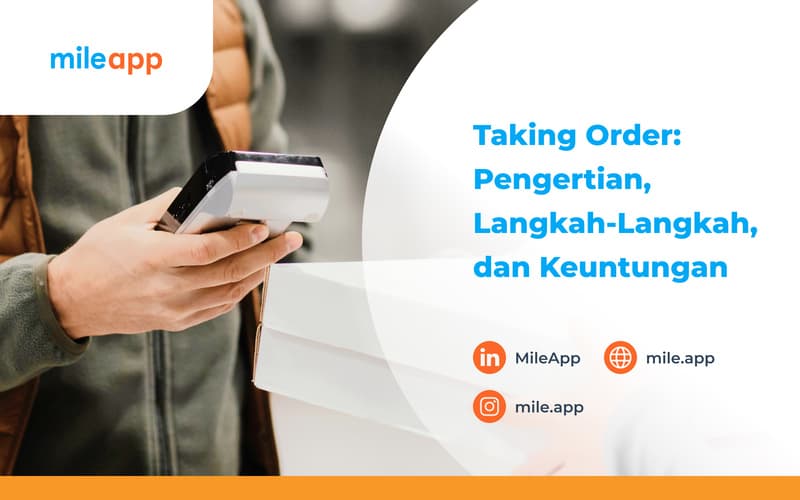
In business, you have probably heard the term order taking. Order taking is the key step that connects customers with the products or services they need. It is the moment a company listens to what a customer wants and records their request to buy specific goods or services.
Many people associate order taking with restaurants and cafés, where staff note down what each table wants. In B2B sales and distribution, however, order taking is closely related to the sales order process, yet the two are not the same thing. Here is a complete guide to order taking, put together by MileApp.

What Is Order Taking?
Order taking is the step that connects customers with the products or services they need. Put simply, it is the process of receiving orders from customers: the point at which a customer submits a request to buy a specific product or service from a company or seller.
In a sales context, the order taking process involves collecting all the required information, such as the type of product or service ordered, quantity, special specifications, delivery address, and customer contact details. Orders can come in through many channels, including phone, email, messaging apps, e-commerce platforms that rely on last-mile delivery, or directly in a physical store or outlet. In other words, order taking is the first step of any commercial transaction between a seller and a customer.
Read also: Order Taker: Meaning, Duties, and Responsibilities in Sales
Steps in the Order Taking Process
A clear order taking process is the foundation of a well-run business. When a customer decides to buy a product or service, this process is the first gateway to a successful transaction. Based on runsystem.id, here are the steps in order taking you need to know:
1. Receiving the order
Receiving the order is the core of the order taking process. Its main goal is to make sure complete and accurate information about the customer’s request is recorded correctly. This includes the type of product or service requested, the quantity, any special specifications, and the delivery details.
When this data is captured carefully, the company can process orders with high accuracy and avoid mistakes. Receiving orders properly not only meets customer needs but also lays a solid foundation for on-time delivery and a positive customer experience. Field sales teams often capture these orders during outlet visits, a role covered in our guide to canvassing sales.
2. Verifying the order
Order verification is a critical step that focuses on the accuracy and reliability of the information. The goal is to confirm that every detail received from the customer has been recorded correctly before moving to the next stage. During verification, the team or system double-checks the product or service type, quantity, variant, price, and delivery address entered by the customer. This prevents errors and disputes later on.
Verification also confirms that what the customer expects matches what they will receive, which ultimately builds trust and customer satisfaction.
3. Scheduling the delivery
The goal of this step is to set a delivery time that suits the customer’s preferences and stock availability. The company considers the delivery location, the customer’s preferred time window, and its own logistics capacity. With proper scheduling and route planning, the company can avoid late deliveries, make sure goods arrive in good condition, and build a professional image. Effective delivery scheduling also helps plan resources and optimize the logistics process as a whole.
4. Processing the order
Order processing is the stage of order taking that turns a customer request into concrete action. The goal is to run every step efficiently, from order validation through to delivering the product or service. During processing, the team validates order details, checks stock availability, and generates an invoice or receipt. Some distributors issue invoices right at the outlet with on-site billing and mobile invoicing.
This step also involves coordinating with related departments such as production, inventory, and shipping. With proper processing, the company can make sure customers receive their orders as expected, avoid mistakes, and build a reputation for reliability and customer satisfaction.
5. Delivery and tracking
The final step is delivery and tracking, which confirms that the transaction is completed successfully. The goal is to give customers a smooth, transparent experience. Once the order is processed, the goods or services are delivered on the agreed schedule, and tracking gives customers visibility into their delivery status.
The main aim of this stage is to deliver on time, prevent lost or damaged goods, and give customers peace of mind. Many companies close the loop with digital proof of delivery (POD). With efficient delivery and accurate tracking, a company can build customer trust and create a positive experience.
Read also: What Is a Sales Tracking System and How Does It Work?
Benefits of Optimizing Your Order Taking Process
Optimizing the order taking process brings several valuable benefits to a business, improving operational efficiency and customer satisfaction at the same time. Here are three key benefits:
1. Operational efficiency
Operational efficiency is one of the most important benefits of a well-optimized order taking process. The goal is to cut wasted time, resources, and labor when receiving and processing customer orders. With an efficient system, such as sales force automation (SFA), a company can avoid miscommunication about orders, reduce the risk of data entry or processing errors, and improve coordination between departments.
2. Higher customer satisfaction
The next benefit is higher customer satisfaction, a direct result of a well-managed order taking process. Customers feel valued and heard when their orders are received properly, their questions are answered quickly, and their products arrive on time. Higher satisfaction leads to better customer retention and positive word-of-mouth recommendations.
3. Lower costs
The final benefit is lower costs. An efficient order taking process reduces the waste of resources, time, and effort that can occur when receiving, processing, and delivering customer orders.
By minimizing the risk of errors and overstocking, a company can save on production and logistics costs. A structured process also reduces the need to repeat or revise orders, which cuts administrative and handling costs. These savings have a direct impact on profitability and help the company stay competitive in the market.
Read also: What Is a Transportation Management System (TMS)?
We hope this overview helps you understand and apply order taking in your company. A structured order taking process keeps your business in step with how modern sales operations work, because order taking is where every commercial transaction between a seller and a customer begins.
MileApp helps companies digitize the whole flow, from taking orders in the field to scheduling, delivery tracking, and analyzing estimated delivery times with real-time data. Ready to see how it works for your team? Book a free demo with MileApp by filling in the form below.
Sources:
- pintarjualan.id
- glints.com
- restofocus.com
- runsystem.id