Proof of Delivery (POD): 5 Benefits of e-POD for Business Growth

POD stands for proof of delivery, the evidence that a shipment has been received by the customer in good order. In modern logistics, POD has evolved into e-POD, or electronic proof of delivery, which brings greater efficiency and transparency to the distribution process.
Capturing proof of delivery protects your delivery team from misplaced parcels, fraudulent claims, and delivery errors. With so many businesses and transactions now running online, tracking and documenting every activity has become essential, especially in logistics.
Everything from ordering to delivery is handled online, so it is important to make the delivery process as transparent as possible for customers. Technology-based logistics solutions bring many benefits, such as route and load planning with route optimization and load optimization. In this article, MileApp explains how e-POD can help your business grow.

How Proof of Delivery (POD) Has Evolved
There are several reasons why traditional, paper-based proof of delivery is no longer fit for purpose:
- Storage and security
Drivers have to keep physical documents safe from loss or damage all day, and other teams then have to file them at head office. Losing a single document creates real risk. - Manual data entry
Keying in data one record at a time takes a lot of time and effort, and it increases the risk of input errors that affect report accuracy, team efficiency, and overall service quality. - Not environmentally friendly
Using large amounts of paper every day does nothing to reduce your carbon footprint. The more deliveries you make, the bigger the environmental impact.
Read also: What Is a Delivery Management System and Why Does It Matter?
What Is e-POD (Electronic Proof of Delivery)?
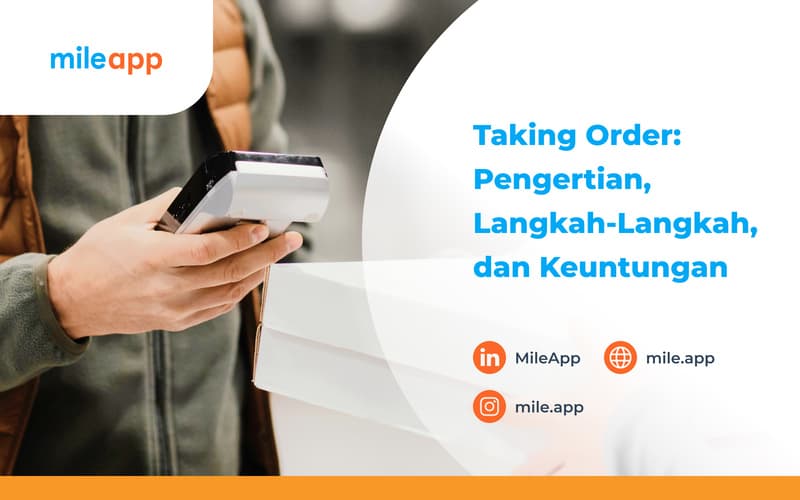
According to time-matters.com, electronic proof of delivery (e-POD) is the digital version of a delivery note, the document used to confirm that a delivery has been completed. e-POD lets drivers capture that data and record whether each task succeeded or failed. Drivers can see order and customer details, including special instructions, and send the data collected at the delivery point in real time.
e-POD also lets drivers capture proof of delivery in many formats, such as photos, signatures, QR codes, barcodes, or custom forms. Meanwhile, the management team gets richer data, such as driver details, vehicle details, the driver’s location (geo-stamp), and the time the e-POD was captured (time-stamp).
With more information and faster deliveries, companies can offer a better customer experience while lowering operating costs.
Read also: What Is a Transportation Management System (TMS)?
Benefits of Electronic Proof of Delivery for Business Growth
Technology keeps advancing quickly and brings new advantages to every industry, including logistics. One technology with a clear positive impact on business growth is Electronic Proof of Delivery (e-POD).
For businesses, e-POD has strong potential to improve operational efficiency, raise service levels, and cut administrative costs. Here are the main benefits of e-POD for business growth.
1. Faster deliveries
e-POD gives drivers simple instructions and guides them through a predefined workflow. Drivers no longer need to worry about forgetting a procedure, so they can stay professional in front of customers at all times.
Because it is easy to use, drivers are less likely to make paperwork mistakes, need to call head office or dispatch with questions less often, and can complete more jobs per day. Daily KPI reporting also becomes faster because data is available in real time.
2. More consistent workflows
Connecting every team on one platform creates a uniform network across your delivery operation. It becomes a standard process that employees can follow consistently across departments, depots, and delivery stages.
The system makes sure everyone involved in delivery follows the same standard when collecting data or creating reports, and the data itself is captured in the same format. That consistency makes it easier to build a stable data flow that everyone can access and use.
3. Faster issue resolution
Issues are resolved faster and more easily with e-POD because all data is recorded in the system. Any customer claim can be verified immediately, and problems can be settled more quickly. All communication can run through the system, so the company can clearly tell genuine claims from false ones.
4. Comprehensive data for analysis
Besides being stored securely, e-POD data can be mapped at scale for analysis and shown on a dashboard in different views, or kept as raw data in a central system.
The collected data is also available to teams across departments. For example, the warehouse team can manage stock levels and process returns faster, the finance team can issue e-invoices sooner (see how on-site billing speeds this up), and the customer service team can be more proactive because it can see any delivery issue sooner.
5. Better customer satisfaction
Several features integrated with e-POD help operations teams make sure customers receive accurate information about their deliveries, such as:
- Notifications that help customers anticipate when their parcel will arrive and be available around the ETA (Estimated Time of Arrival).
- Real-time tracking that keeps operators and customers up to date on delivery status and location. For example, knowing where a parcel is helps agents tell customers when it will arrive.
- Delivery information that helps operators confirm receipt while letting customers add special instructions for future deliveries. Ratings and feedback, for example, show operators how drivers perform on different routes.
By keeping customers informed through delivery documents, status updates, and fast dispute resolution, companies can manage customer expectations, maintain trusted relationships, and deliver a good overall experience.
Read also: First Mile vs Last Mile: Differences from the Middle Mile
MileApp is a logistics platform that offers a range of tools to simplify daily operations, with features such as route optimization, a real-time dashboard, and e-POD.
Digitalizing logistics is not just about adopting new technology; it is also about creating a better customer experience. With a platform like MileApp, logistics companies can strengthen their market position, handle industry challenges, and build last-mile services that win customers over. Book a free demo by filling in the form below and help your business #GoExtraMile.
Recent Posts