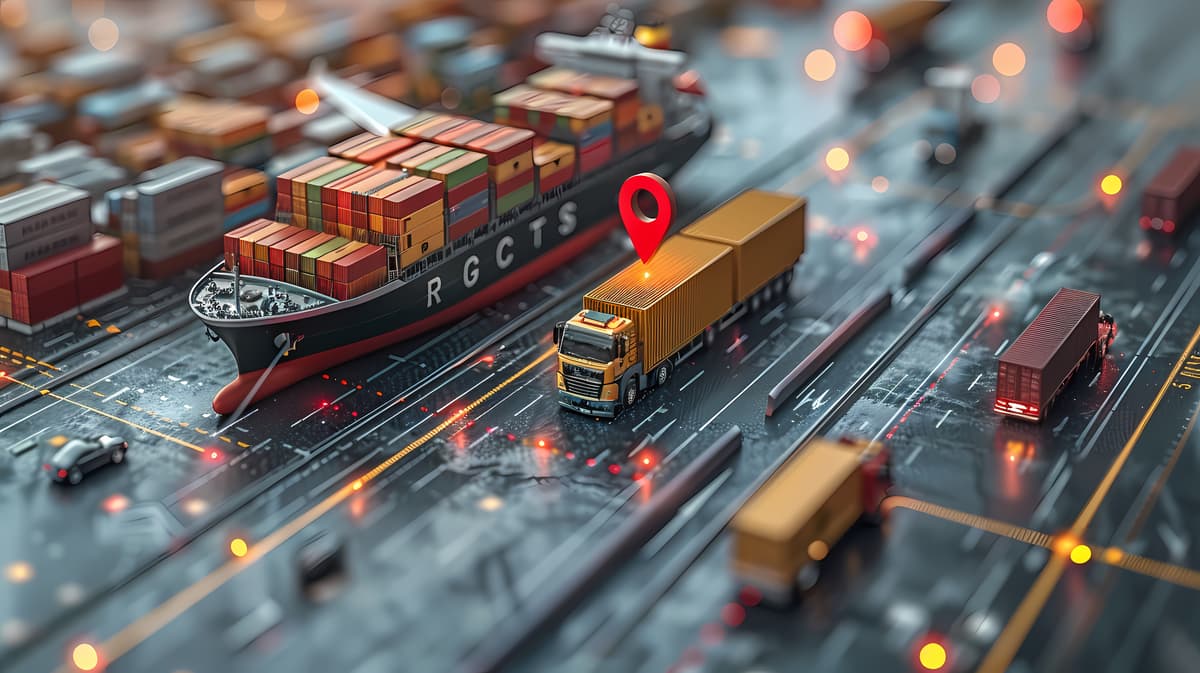
Best Route Optimization Software 2026: 5 Apps Compared

Route optimization software has become a key factor in staying operationally competitive as logistics ecosystems across Southeast Asia keep growing.
According to Research and Markets, the global route optimization software market reached USD 10.05 billion in 2026, with a CAGR of 14.3% through 2030.
In Indonesia alone, the e-commerce logistics market is worth USD 6.4 billion, driven by growth in online shopping and strong demand for on-time delivery in major cities. Similar pressures are visible in fast-growing hubs such as Manila, Ho Chi Minh City, and Kuala Lumpur.
For companies that depend on high mobility, such as distributors, couriers, and e-commerce businesses, route optimization technology is no longer an optional extra.
These apps identify the best route by considering congestion, the distance between stops, driver schedules, traffic conditions, and delivery time windows.
Research published in 2026 shows that route optimization can cut fuel consumption by 15-20%, shorten delivery times by 30-40%, and reduce total logistics operating costs by 10-30%.

Read also: Route Optimization vs Google Maps: Which Should You Use?
What Is Route Optimization?
Route optimization is a method for finding the best route for field workers such as couriers, drivers, surveyors, sales reps, and technicians, so they reach their destinations in the most effective and efficient way.
Unlike route planning, which only sets the order of stops, route optimization uses AI-based algorithms and real-time data to build routes that account for many operational variables.
Route optimization apps analyze congestion levels, distances between stops, staff schedules, traffic conditions, vehicle constraints (capacity, multi-chamber compartments), delivery time windows, and even driver preferences.
The algorithm then produces the best route: not just the shortest in distance, but also the fastest in travel time and the most economical in operating cost.
Route optimization technology helps companies deliver orders to many locations even with limited resources and time.
According to Local Eyes (2026), route optimization delivers tangible results: 15-20% lower fuel consumption, on-time delivery performance of up to 95% (compared with 75% using traditional methods), and 15-20% lower CO2 emissions.
Read also: What Is a Delivery Management System and What Are Its Benefits?
5 Route Optimization Software Recommendations for 2026
Here are route optimization apps worth considering to support your business operations in 2026.
1. MileApp
MileApp is a no-code, end-to-end operations management platform built for field operations, with its roots in Indonesia. It provides a complete solution covering Planning, Monitoring, and Execution for many types of field work, including delivery, field sales, field services, and field surveys.
For route optimization, MileApp offers route planning that can cut travel time by up to 40% using AI-based algorithms that consider automatic clustering, multi-trip scheduling, time windows, cost priority, and traffic-aware routing.
Cold chain management is also available to protect temperature-sensitive cargo, while multi-chamber cargo management lets you manage different cargo compartments within one vehicle.
As a full operations platform, MileApp goes beyond route optimization. It also includes real-time GPS tracking with live ETA/ETD, geofencing alerts, route playback for historical review, and telematics and IoT integration to monitor vehicle and driver performance, the core of a modern fleet management system.
Safety monitoring features such as MDVR (live video recording), ADAS AI (advanced driver assistance), and DSM AI (driver fatigue detection) are also available to improve fleet safety.
At the execution stage, MileApp provides digital proof of delivery (POD), mobile field sales execution (order taking, merchandising, canvassing), retail audits with AI image recognition (OOS Detection AI, Shelf Detail AI, Planogram AI), and Voice to Notes for converting voice updates into text.
MileApp is used by distribution, logistics, FMCG, and cash logistics teams to plan, track, and verify their daily field tasks in one platform.
MileApp focuses on enterprise readiness with ISO 27001:2022 certification (Information Security Management System), a 99.95% SLA, and 24/7 support. It offers flexible plans for different stages of business growth, with self-serve sign-up and sales consultation for customization needs.
2. Mekari Qontak
Mekari Qontak is an end-to-end solution for managing sales travel routes, suitable for small and medium-sized businesses through to enterprises. The platform is designed to monitor and manage field sales activity in real time, with a focus on productivity and operational visibility.
Through its Sales GPS Tracking app, Mekari Qontak lets managers build visit routes for field sales reps based on customer locations, saving time using information from the sales mapping app. Key features include a Live GPS Tracker for real-time location monitoring, field activity tracking, Omnichannel and CRM integration, an AI chatbot, workflow automation, reporting and analytics dashboards, and an Order Management App.
One strength of Mekari Qontak is its broad integration with other modules in the Mekari ecosystem, letting businesses manage sales operations in a single digital ecosystem connected to the company’s accounting, HR, and procurement systems.
3. OptimoRoute
OptimoRoute is a route optimization app well suited to businesses facing order spikes with limited resources. It helps companies deliver all their orders more effectively and efficiently using an algorithm-based optimization approach.
OptimoRoute’s strength is its web-based scheduling, which can be accessed digitally so users do not need to schedule manually. The app can be integrated with existing systems at the company’s logistics management center, enabling data synchronization and more coordinated planning.
OptimoRoute also provides live tracking so the central system can monitor distribution flows in real time. Its dedicated driver app includes accurate location detection, reducing the risk of location errors that can delay deliveries and hurt customer satisfaction.
4. Route4Me
Route4Me is a flexible route optimization platform that goes beyond simply finding the best route. It also works as a delivery planning tool that helps users build and choose the best route for a single delivery run covering many addresses at once.
With Route4Me, users can see each stop’s location based on the address entered, so companies or field workers can visit and deliver to many stores in one trip without surveying addresses manually. This saves considerable time and operating cost, especially for field workers with visit and sales targets across many stores.
Supporting features include dynamic route optimization that adjusts routes automatically as conditions change, GPS tracking for real-time visibility, and territory management for more efficient division of work areas. This flexibility makes it suitable for many types of businesses that need complex multi-stop route management.
5. MyRouteOnline
MyRouteOnline is known as a route planner that lets users schedule deliveries to many locations at once with a simple, fast process. It can provide accurate delivery route options with detailed information about route conditions, including precise delivery time estimates.
MyRouteOnline can be accessed via a browser or a mobile app available in app stores, giving users flexible access across devices. It is easy to use: scheduling a delivery route takes just three simple steps.
A notable advantage of MyRouteOnline is its ability to read delivery addresses directly from Microsoft Excel files easily and accurately. This is very helpful for companies that already keep their customer addresses in spreadsheets, since the data can be imported straight into the system without manual entry.
Read also: What Is Sales Force Automation and How Does It Help Field Sales Close Faster?
Benefits of Route Optimization Software for Business Operations
Implementing a route optimization app brings measurable benefits for companies that depend on high mobility and on-time delivery. According to recent 2026 industry studies, here is the real impact of route optimization:
1. Lower operating costs
Route optimization can reduce fuel consumption by 15-20% by eliminating unnecessary mileage and cutting idle time in traffic. In markets such as Indonesia, where last mile delivery accounts for more than 50% of total shipping costs, these savings are significant.
A ResearchGate study (2026) found that optimizing fuel distribution routes on the Jakarta-Tanjung Gerem corridor reduced travel distance by 17.21%, which translated directly into cost and time savings.
2. Faster, more accurate deliveries
With dynamic rerouting that adjusts routes to real-time traffic conditions, companies can speed up deliveries by 30-40%. On-time delivery rates can also rise to as much as 95%, compared with 75% using traditional planning methods.
According to research published in Dinasti Review (2025), more than 80% of customers will not buy again from a company that fails to deliver on time, so these improvements directly affect customer retention.
3. Higher fleet productivity
Route optimization lets companies handle more deliveries with the same number of vehicles by improving vehicle utilization. AI-powered planning can raise vehicle utilization by up to 60%, so companies can serve growing order volumes without adding to their fleet.
4. Lower carbon emissions
With more efficient routes and less idle time, route optimization can cut CO2 emissions by 15-20%. This supports corporate sustainability targets and responds to regulatory pressure and customer expectations for greener logistics.
5. Operational scalability
With digital, automated systems, companies can easily increase delivery volume or expand their coverage area without growing the planning team at the same rate.
Automating route planning can cut planning time by up to 75%, freeing operations teams to focus on more strategic work.
For businesses that depend on high mobility and on-time delivery, route optimization is not only about cost efficiency but also about long-term competitiveness.
Companies that optimize their routes successfully gain healthier operating margins, higher customer satisfaction, and the flexibility to grow without adding assets in a straight line.
Read also: What Is a Transportation Management System (TMS)?
Choosing the Right Route Optimization Software for Your Business
Choosing the right route optimization app requires a clear understanding of your business’s specific operational needs. For e-commerce and courier businesses that need a comprehensive last mile delivery solution, platforms such as MileApp offer full integration from planning to execution, with digital proof of delivery and fleet safety monitoring.
For companies focused on managing field sales teams, Mekari Qontak provides strong integration with CRM and the Mekari ecosystem for end-to-end visibility from sales activity to order conversion. For businesses that need high flexibility and integration with existing logistics systems, OptimoRoute and Route4Me offer robust APIs and extensive customization.
Factors to consider when choosing route optimization software include: operational scale (number of vehicles and daily delivery points), operational complexity (vehicle types, load limits, time windows), integration needs with existing systems, required security and compliance levels (especially for enterprises), and total cost of ownership, including implementation and training costs.
By weighing these factors carefully and testing platforms through a demo or trial period, companies can choose a route optimization solution that meets today’s needs and can scale as the business grows. Book a free demo with MileApp to see how it fits your operation.
Recent Posts