On-Site Billing: Meaning, Steps, and Benefits for Field Sales
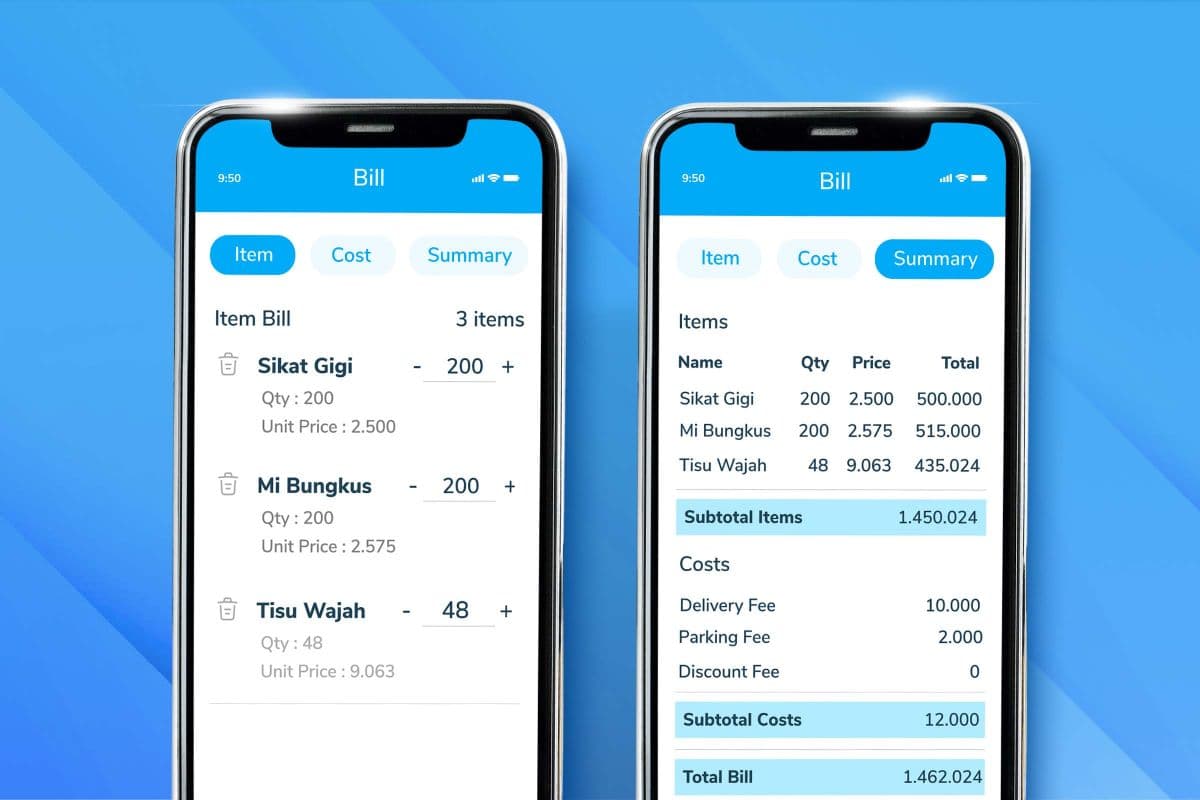
On-site billing means creating and issuing an invoice directly at the customer’s location, usually during a field sales visit. The word onsite itself means “at the location” or “on the spot”: an activity done physically at a specific place, such as an office, factory, project site, or customer’s store, rather than remotely. It is written onsite, on-site, or on site, and is common in work, service, and billing contexts.
In field sales, the onsite concept is used for payments made on the spot. Sales reps can close the order and the invoice right there at the customer’s outlet.
According to tictocdigital.co.uk, 17% of users abandon a transaction because they do not trust the security of the payment information on a site, while another 26% drop out because the payment process is too complicated.
These numbers show how important a simple, trustworthy payment process is.
This is where on-site billing comes in. By making on-the-spot payment safe and efficient, it helps build customer trust and reduces the risk of failed transactions. Here is the full explanation.

What Does Onsite Mean?
Literally, on means “at” and site means “location” or “place”. So onsite means being at, or doing something at, the location. Close equivalents are “on the spot”, “on location”, or “in the field”.
All three spellings, onsite, on-site, and on site, are generally used with the same meaning. The hyphenated “on-site” is the usual form when it comes before a noun as an adjective, for example on-site service or on-site billing.
Examples of How “Onsite” Is Used
The term onsite appears in many fields. Here are the most common examples.
- Onsite work. Employees work at the office or project site rather than from home. Example: “This position requires onsite work five days a week.”
- Onsite service. A technician visits the customer’s location for installation, maintenance, or repair, for example air-conditioning, machinery, or IT equipment. Scheduling this kind of technician work is covered in our guide to field service management.
- Onsite training. Training held directly at the client’s office or factory.
- Onsite interview. A face-to-face job interview at the company’s office.
- Onsite billing. Invoicing directly at the customer’s location during a sales visit. This is covered in more detail below.
Onsite vs Offsite vs Remote
Onsite is often compared with offsite and remote. All three describe where a job or activity takes place.
| Aspect | Onsite | Offsite | Remote |
|---|---|---|---|
| Meaning | At the main location or the customer’s location | Away from the main location, but still face to face | From a distance, without being physically present |
| Work example | Working at the office or project site | A team meeting at a hotel or another venue | Working from home or another city |
| Service example | A technician visits the customer’s home | The item is taken to a workshop or service center | Support by phone or remote access |
| Requirement | Physical presence | Physical presence at another place | Internet connection and a device |
There is also hybrid, which combines onsite and remote work within the same week.
What Is On-Site Billing?
On-site billing is the process of billing or creating an invoice directly where the customer is, usually during a field sales visit. Here, onsite means “right at the location”, which refers to the customer’s outlet or store.
With this approach, sales reps do not need to go back to the office to print or process invoices. Everything can be done on the spot using a mobile device or an app connected to the company’s system.
For this purpose, MileApp offers an On-site Billing feature that helps field sales teams complete transactions at the customer’s location. Reps can enter the order and apply discounts and the total price right away, so the transaction can be closed immediately.
Read also: What Is Sales Force Automation and How Does It Help Field Sales?
MileApp On-Site Billing Steps
Without an app, selling and billing at the customer’s location is usually still manual. In general, the field sales team has to visit stores one by one and pitch the products in person.
When a store agrees to stock the products, the rep usually orders a quantity of goods to be supplied to that store. This can take a long time, especially when done manually.
The rep has to write down the customer’s request (order taking) on paper and pass the order on manually. Delivery only happens after the order slip has been handed in.
From ordering to delivery, the process can take more than one to two days. In the MileApp app, the steps look like this:
Step 1: The sales rep visits the customer
First, the sales team visits the customer in person. This interaction helps the rep understand the customer’s needs better and explain product or service details face to face.
Step 2: Select items from the preset catalog
After the initial conversation, the rep selects items from a product catalog that has been set up in advance. The selection should match the customer’s needs and preferences.
Step 3: Enter the quantity
Once the items are selected, the rep enters the quantity the customer needs. This step matters because it affects price calculation and stock availability.
Step 4: Calculate the price based on quantity
The final price depends on the quantity ordered. The rep needs to calculate it carefully so the price is profitable for the company and still competitive for the customer.
Read also: Order Taker: Meaning, Duties, and Responsibilities in Sales
Benefits of On-Site Billing
In field sales, time efficiency and transaction accuracy are key to keeping customers satisfied and sales teams productive. One approach that supports both is on-site billing, the process of creating invoices directly at the customer’s location.
With on-site billing, the sales process becomes faster, more transparent, and more efficient for both the rep and the customer. It not only speeds up billing but also reduces administrative errors and makes transactions more transparent.
With these advantages, on-site billing has become a practical, increasingly common part of modern sales operations. Key benefits include:
- Faster transactions, which make the field sales rep’s job easier
- Faster transactions also mean orders are processed and delivered sooner, especially when paired with digital proof of delivery
- More transparent transactions
- Higher customer satisfaction
Read also: What Is a Sales Tracking System and How Does It Work?
Onsite FAQ
What does onsite mean?
Onsite describes an activity done directly at a location rather than remotely. Examples include working at the office, a technician visiting a customer’s home, or a sales rep creating an invoice at a customer’s store. The term combines “on” (at) and “site” (location).
What does on site mean in a job posting?
In a job posting, on site means the employee must work at the office or work location set by the company. This differs from remote work, which can be done from anywhere, and hybrid work, which combines office days with working from home.
What is the difference between onsite and remote?
Onsite means being physically present at the work location or the customer’s location, while remote means working from a distance without going there. Onsite work suits tasks that need direct interaction or physical tools, while remote suits computer-based work.
What is onsite billing?
Onsite billing is billing done directly at the customer’s location, usually by field sales reps during a visit. The rep records the order, calculates the total price and discounts, and creates the invoice on the spot in an app, so there is no need to return to the office to process the invoice.
It is time for your sales team to work faster without the hassle of manual billing. With the on-site billing feature in the MileApp sales force automation app, every transaction can be recorded and billed directly at the customer’s location in real time.
It speeds up the sales process and builds customer trust through better transparency and data accuracy. Boost your field sales productivity today: book a free demo with MileApp by filling in the form below.
Sources:
tictocdigital.co.uk
Recent Posts